“If you behave badly in this life, you’ll become a Chilean in the next.”
Raul Ruiz
Chilean filmmaker & writer
The Infamous
Ramirez Hoffman
Performance in English
Duration 80 minutes
No intermission
Overview
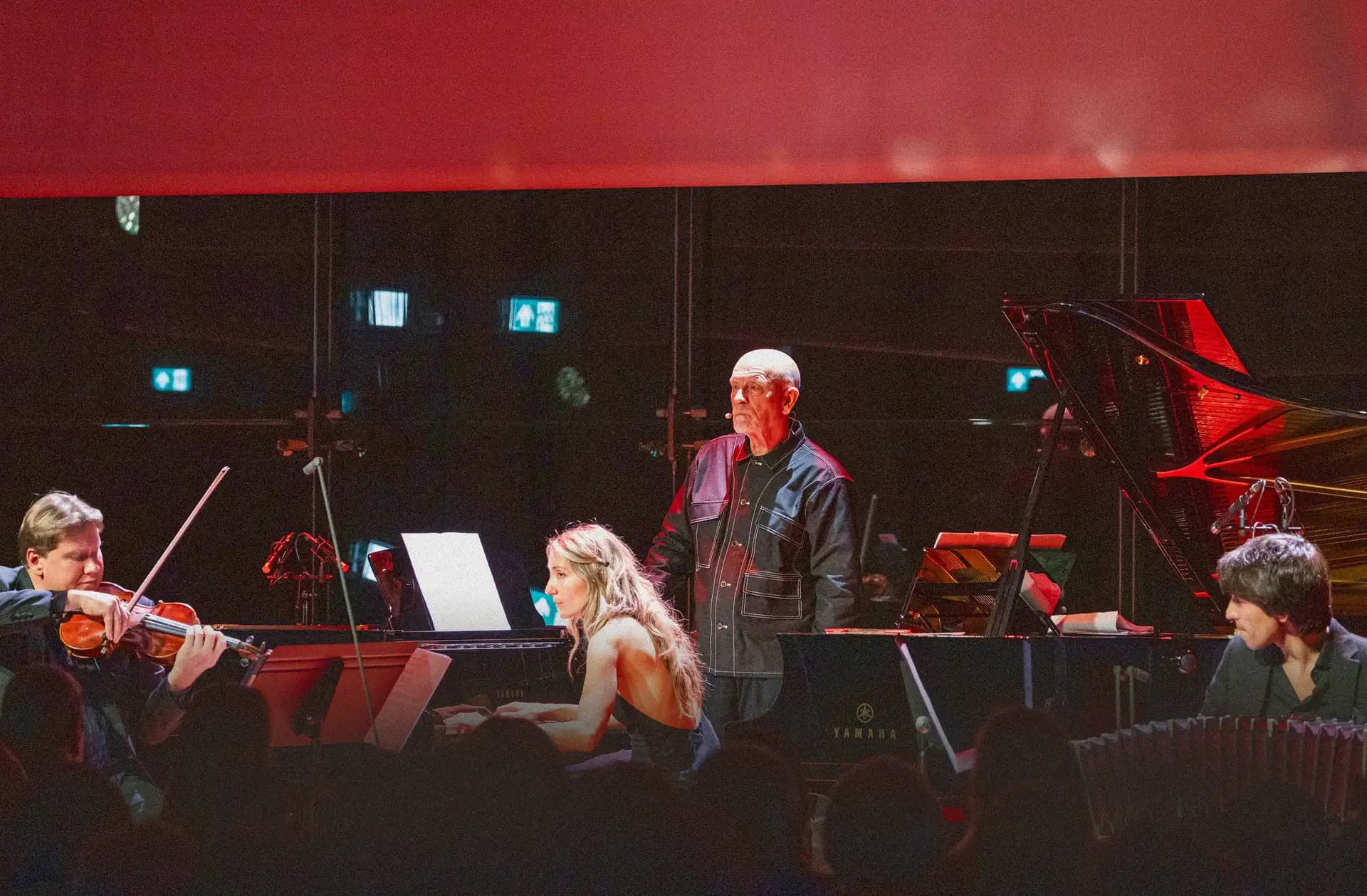
Drawn from a book by one of the giants of contemporary literature, Chilean Roberto Bolaño, THE INFAMOUS RAMIREZ HOFFMAN is the latest collaboration between John Malkovich and Anastasya Terenkova.
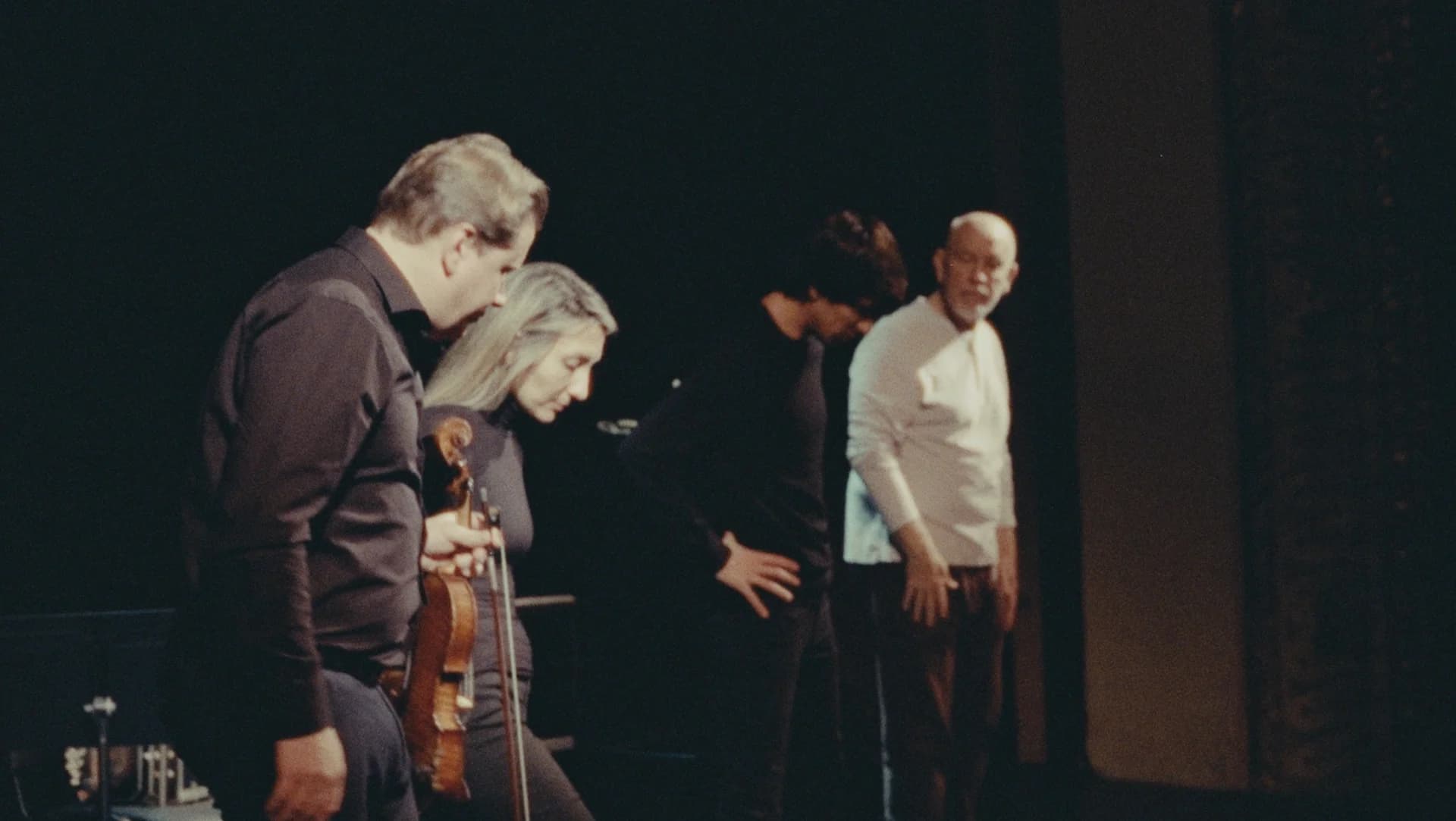
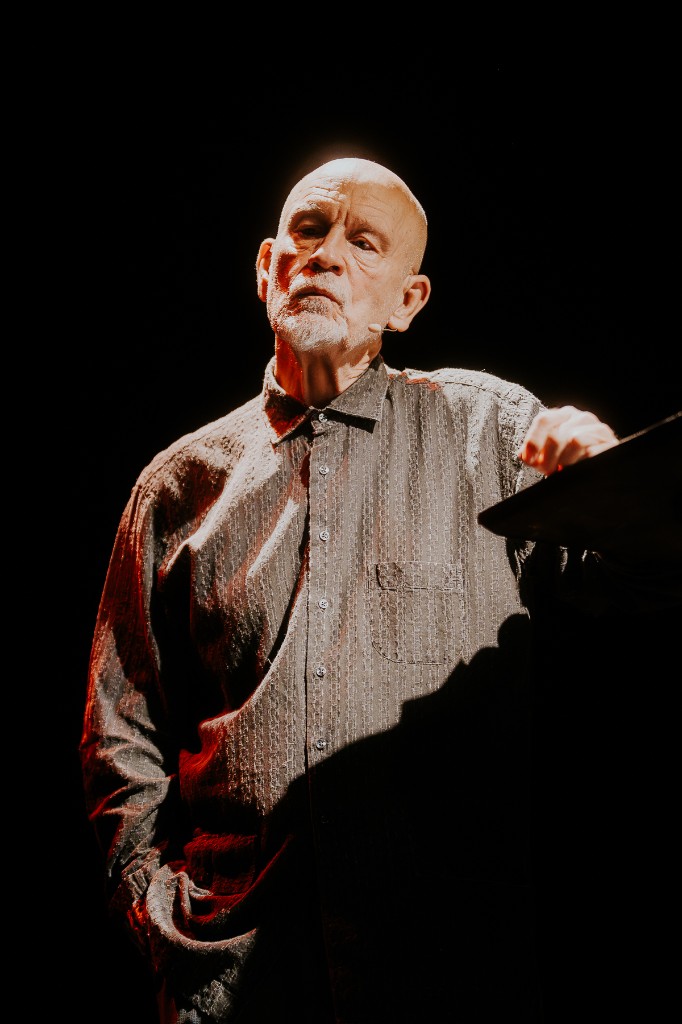
An innovative piece of storytelling, The Infamous Ramirez Hoffman combines a gripping spoken narrative with the drama and passionate soul of Tango. For 80 minutes, this music‑literature dialogue has the audience spellbound, struggling along with the narrator to discover who Ramirez Hoffman really is: a fearless pilot in the service of the Chilean dictatorship, who writes poems in the sky with airplane smoke — or a cold‑blooded murderer, whose killing is an aesthetic act.
The Infamous Ramirez Hoffman is an involving exploration of the complexity and appeal of evil, the nature of free will, the limits of personal responsibility, and the state of our society.
Artists
Story
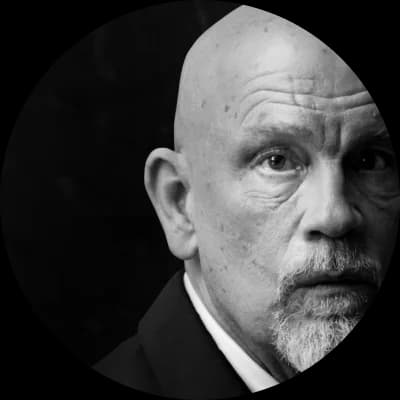
“The piece is adapted from the novel Nazi Literature in the Americas by Roberto Bolaño. The book features fictional histories of imaginary Nazis, most all of whom have some connection, however tenuous, to the literary world — both the real one and Bolaño’s completely invented one.
The characters of Bolaño’s “Nazi Literature in the Americas” are lost souls, filled with boundless potential in some cases, and equally filled with boundless hatreds and certainties.”
John Malkovich
Literature
Roberto Bolaño’s book The Nazi Literature in the Americas offers fictional biographies of imaginary Pan‑American authors, egocentrics and criminals, many of whom sympathise with Nazis and fascisti, are depicted in a gallery of alienated snobs. In fact, Bolaño admitted that his book was, in part, based on celebrated writers, some despicable monsters, some now considered heroes.
Throughout the twentieth century Chile swung violently between left and right wing politics. Salvador Allende, elected in 1970, was the first socialist president in a liberal democracy in Latin America.
In 1973, the military overthrew him in a coup supported by the CIA. Allende died by suicide that day during the assault on the presidential palace. General Augusto Pinochet led the junta that followed and ruled Chile until 1990.
Roberto Bolaño — an unsettling mix of overt satire and covert elegy.
Author
Roberto Bolaño, a novelist, short‑story writer, poet and essayist, was born in Chile in 1953.
After moving to Mexico as a child, he returned to Chile in 1973 to support the Allende government. After the coup, he was arrested as a suspected foreign terrorist and spent eight days in jail before being released by former classmates who had become detectives. Bolaño moved to Europe in 1977 and settled near Barcelona, where he married. He worked there as a dishwasher, campground custodian, bellhop, and garbage collector.
He had a difficult relationship with Chile, and was known there for his attacks on Isabel Allende and other figures of the country's literary establishment. La literatura nazi en América (Nazi Literature in the Americas) was published in 1996; its fictional biographies span the twentieth and twenty‑first centuries. Its final chapter, “The Infamous Ramírez Hoffman,” was later expanded into the novel Estrella distante (Distant Star). In 1999, Bolaño won the Rómulo Gallegos Prize for Los detectives salvajes (The Savage Detectives). He died in 2003. In 2008, he was posthumously awarded the National Book Critics Circle Award for Fiction for his novel 2666.
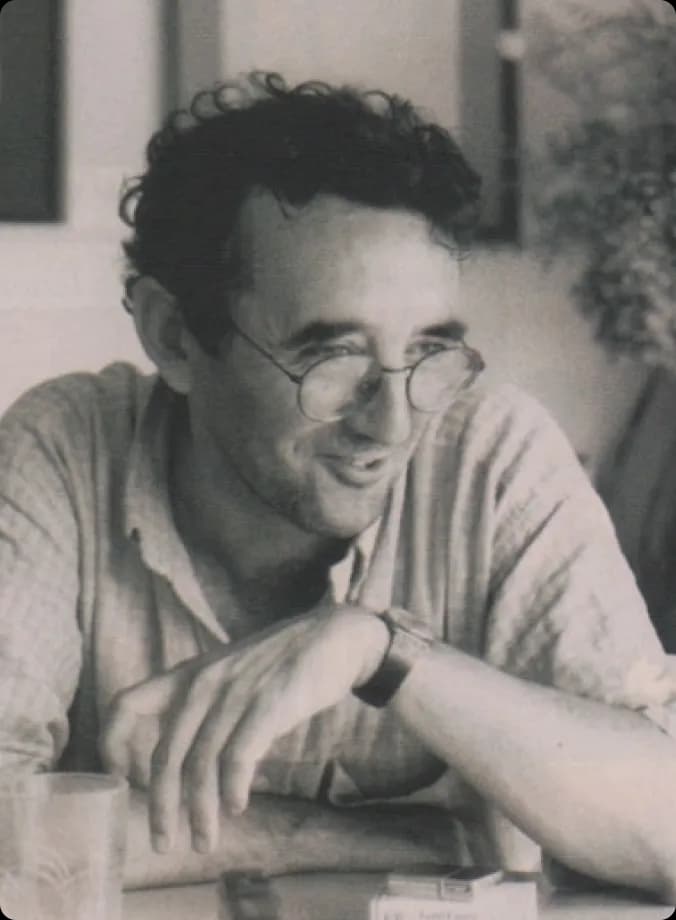
“Roberto Bolaño — the most significant Latin American literary voice of his generation.”
The New York Times
Video
Behind the scenes
The Infamous Ramirez Hoffman
Music
“There are so many stories in the world or ideas in the world that don’t necessarily lend themselves to a play or a concert, but they lend themselves to this kind of collaborative form.”
John Malkovich
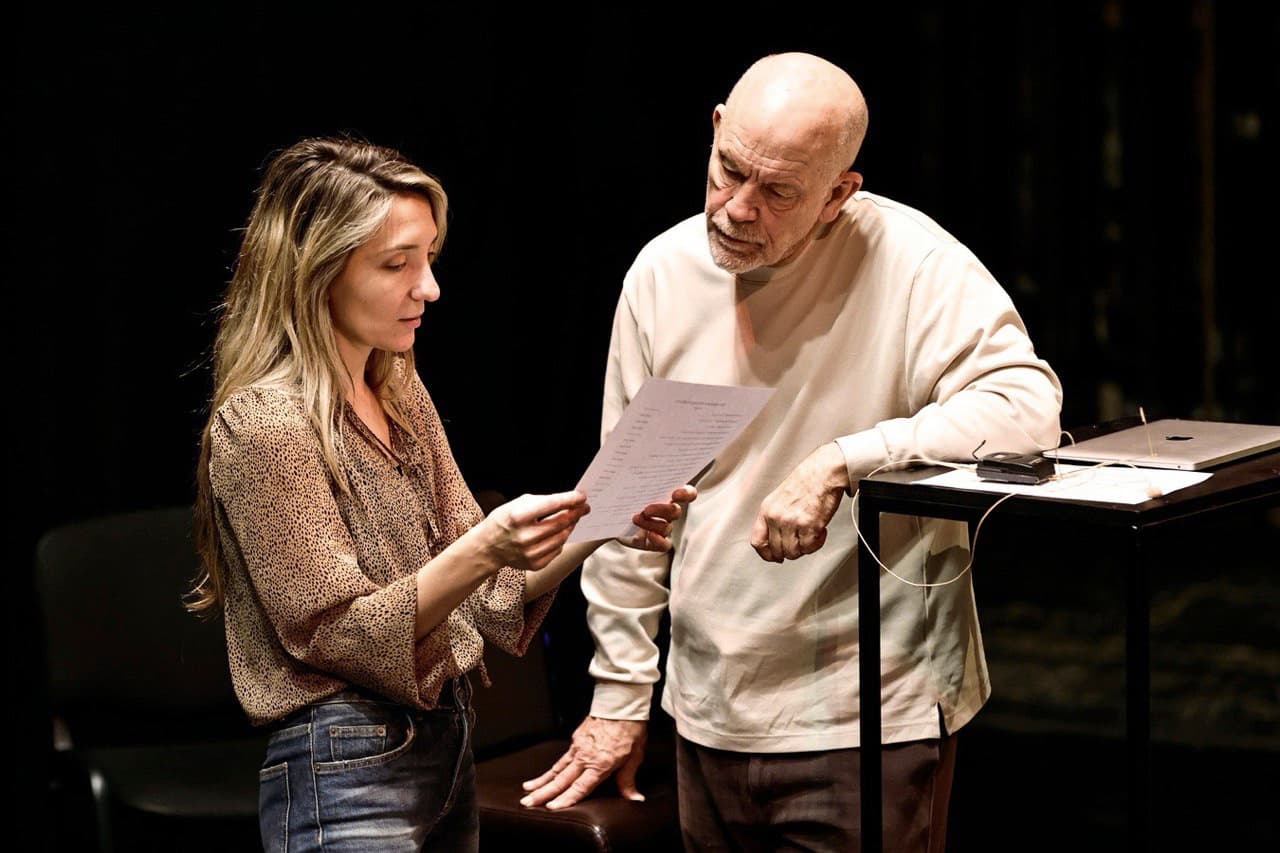
John and Anastasya created an evocative musical soundscape for piano, bandoneon and violin from compositions that are extremely varied in genre, but which all capture the drama and soul of tango. It offers a passionate counterpoint to the understated prose and pared‑down poetry of Bolaño’s writing and includes pieces by Astor Piazzolla, Leonid Desyatnikov, Antonio Vivaldi, Alfred Schnittke, Max Richter, and many others.
The score skilfully propels us from one emotion to another, from scene to scene, over the course of 20 years.
The Infamous Ramirez Hoffman starts with perhaps the best‑known piece, “Libertango” by Astor Piazzolla, and then ventures into the Baroque (Antonio Vivaldi, Johann Paul von Westhoff), Russian “minimalism” (Leonid Desyatnikov, Sergey Akhunov), the Soviet avant‑garde (Alfred Schnittke), post‑minimalism experimental (Giovanni Sollima, Alberto Iglesias, Max Richter) and compositions from contemporary classical and film‑score composers from around the world.
Repertoire
Astor Piazzolla
Libertango
Leonid Desyatnikov
Tracing Astor
Astor Piazzolla
Oblivion
Leonid Desyatnikov
Death of Absalom
Antonio Vivaldi
Cello Sonata RV 44 (Allegro poco)
Yéfim Rosenfeld / Leonid Desyatnikov
My Happiness
Astor Piazzolla
Milonga del Angel
Johann Paul von Westhoff
Imitazione delle Campane
Max Richter
Mercy
Fazil Say
Hopa (from 'Four Cities' sonata for cello and piano)
Johann Paul von Westhoff
Imitazione delle Campane
Astor Piazzolla
Vuelvo Al Sur /excerpt/
Lera Auerbach
The Mirror With Three Faces' trio /excerpt/
Alfred Schnittke
Tango in a Madhouse
Alberto Iglesias
Blackout
Astor Piazzolla
Adiós Nonino' piano cadenza
The Doors
Riders on the Storm
Lera Auerbach
The Mirror With Three Faces' trio /excerpt/
Sergey Akhunov
Big Elegy to John Cage
Alberto Iglesias
The Dancer Upstairs. Broken piano
Giovanni Sollima
Il Bell'Antonio
Production history
Since its premiere at the Lisbon Film Festival in 2022, The Infamous Ramírez Hoffman has travelled across Europe and South America, resonating strongly with critics and audiences alike. The project has appeared at renowned festivals and venues, including the Herbstgold Festival, Eisenstadt, Austria, the House of Music in Budapest, the National Theatre “Mihai Eminescu” in Timișoara, Rumania, the Cyprus Theatre Festival, Teatro Ópera in Buenos Aires, the Theatro Municipal in Rio de Janeiro, Sala São Paulo, and leading venues in Santiago de Chile and Brazil. Previous incarnations of the ensemble featured distinguished international soloists, among them violinists So‑Ock Kim and Alissa Margulis, and bandoneonists Mario Stefano Pietrodarchi and Per Arne Glorvigen.
Composers
Astor Piazzolla Alfred Schnittke
Johann Paul von Westhoff
Leonid Desyatnikov
Antonio Vivaldi
Alberto Iglesias
Sergey Akhunov
Efim Rosenfeld Max Richter
Fazil Say Lera Auerbach
The Doors Giovanni Sollima
Biography
Astor Piazzolla (1921–1992) is considered one of the most important tango composers in the world. He revolutionized the form with “Tango Nuevo”, which incorporates elements of jazz, classical music and an integral synthesis of the tango’s whole range, from its early foundations to our days. After a long struggle to gain acceptance for his new concept of tango, in 1985 he was awarded the title “Illustrious Citizen of Buenos Aires”.
 © arterraprojects
Press
» A performance that united literature and music in a sublime way. «
Gabriel Zorzetto, Estadão, São Paulo, Brazil
» A reflection on memory, violence, and historical responsibility. «
Gabriel Zorzetto, Estadão, São Paulo, Brazil
» Dramatic, arresting, almost imprisoning in its intensity. «
Nina Mayer, BVZ, Austria
» The power of the performance lies in its ability to shift the spectator from passivity into presence. «
Flávia Lima Moreira, Correio do Povo, Brazil
» We are given the story of a serial killer, refracted through several points of view, and through it we come to understand the world, the human being, society — and, somewhere within that system, even ourselves. «
Adam Rimay, Index, Budapest, Hungary
» In their superb performance, the three musicians seemed to be playing chamber music not only with each other but also with Malkovich himself. «
Irineu Franco Perpetuon, Concerto, São Paulo, Brazil
The Infamous
Ramirez Hoffman

 © arterraprojects
 © arterraprojects
 © arterraprojects
 © arterraprojects
 © arterraprojects
 © arterraprojects
 © arterraprojects
 © arterraprojects
 © DF
© DF © DF
© DF © DF
© DF © DF
© DF © Mohai Balázs
 © Mohai Balázs
 © Mohai Balázs
 © Mohai Balázs
 © Renato Mangolin
 © Sebastián Domínguez
 © Renato Mangolin
 © Sebastián Domínguez
 © Renato Mangolin
 © Sebastián Domínguez
 © Sebastián Domínguez
 © Renato Mangolin
 © Sebastián Domínguez
 © Isadora Quintana
 © Renato Mangolin
 © Isadora Quintana
 © Renato Mangolin
 © Isadora Quintana
 © Renato Mangolin
 © Isadora Quintana
 © Renato Mangolin
 © Isadora Quintana
 © Renato Mangolin
 © Isadora Quintana
 © arterraprojects
Press
» Everyone went to see John Malkovich. They left with much more: a great ensemble performance. «
Fábio Prikladnicki, GZH, Brazil
» The music gives the story its beginning, middle, and end. It helps create meaning. «
Fábio Prikladnicki, GZH, Brazil
» An unforgettable artistic experience. «
Alina Lelescu, Timișoara, Romania
» It would be impossible not to recognize the extraordinary talent and devotion of each artist behind The Infamous Ramirez Hoffmann, the very force that makes it so piercing. A rare intensity — rooted in mastery and soul — felt in every word, every note, every second. «
Flávia Lima Moreira, Correio do Povo, Brazil
» An Emblematic Performance by John Malkovich. «
Escrituras Cênicas, Brazil
» Anastasya Terenkova, together with her chamber trio, brought to the stage a musical performance of rare refinement and intensity. The source text is powerful enough on its own to stir emotion, but here it takes on something close to a cinematic experience: the music transforms the atmosphere of each scene and reshapes the emotional landscape of the narrative. «
Adam Rimay, Index, Budapest, Hungary