
Report
on the Blind
Overview
REPORT ON THE BLIND features John Malkovich in a riveting portrayal of one man’s obsessive search for the source of evil in the world. It is paired with an avant‑garde piano concerto performed by Anastasya Terenkova and chamber orchestra.
Malkovich distilled Report on the Blind from a chapter of the same name in the novel On Heroes and Tombs by the celebrated Argentine writer and social activist Ernesto Sabato.
This tour‑de‑force of primordial paranoia soars on the richly varied music of the acclaimed Concerto for piano and string orchestra by Soviet avant‑garde composer Alfred Schnittke, a leading figure in Russian non‑conformist music. The work of both authors reflects the grim political realities under which they lived in the mid‑1900’s.
 © Luis Alberto Steinberg
Press
“The transformative and visionary power of Malkovich and Terenkova's performance. Literature and music have been displaced and become something unknown, alongside the established boundaries.”
Göteborgs‑Posten, Sweden
“The encounter between the words delivered by the devil Malkovich and the music creates a real sound drama.”
www.teatroecritica.net, Italy
“Malkovich interprets Sabato's text with such precision of tempos, rhythms and timbres that he transforms his voice into a musical instrument.”
Forli Review, Italy
“Terenkova skillfully balances between virtuosic passages and moments of calm, which form the essence of the piano part. At times, one could sense that the music and text were mutually dependent.”
www.klasicnimirko.com Novi Sad, Serbia
“The words harmonize perfectly with the dark, shadowy, enigmatic aura of the music that inlays the 'melologue'”
La Critica, Italy


Story
Fernando Vidal Olmos is convinced that a "Sacred Sect of the Blind" is taking over the world, and that he alone has perceived the conspiracy. Ultimately, he decides it is up to him to seek out the Sect, at the risk of losing his life, embarking on a suicide mission to confront evil.
The Report on the Blind is an allegory of persecution and paranoia. It is the hidden heart of the Sabato's acclaimed novel On Heroes and Tombs.
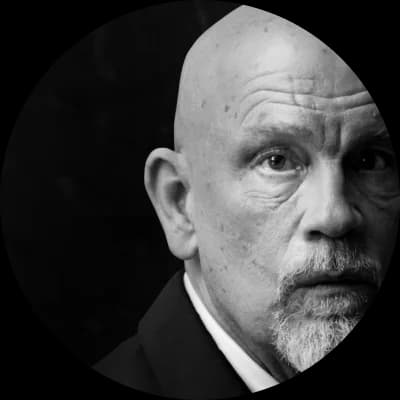
“I loved this part of the book because it expresses something I completely agree with — it's the Blind who control the world, metaphorically.”
John Malkovich
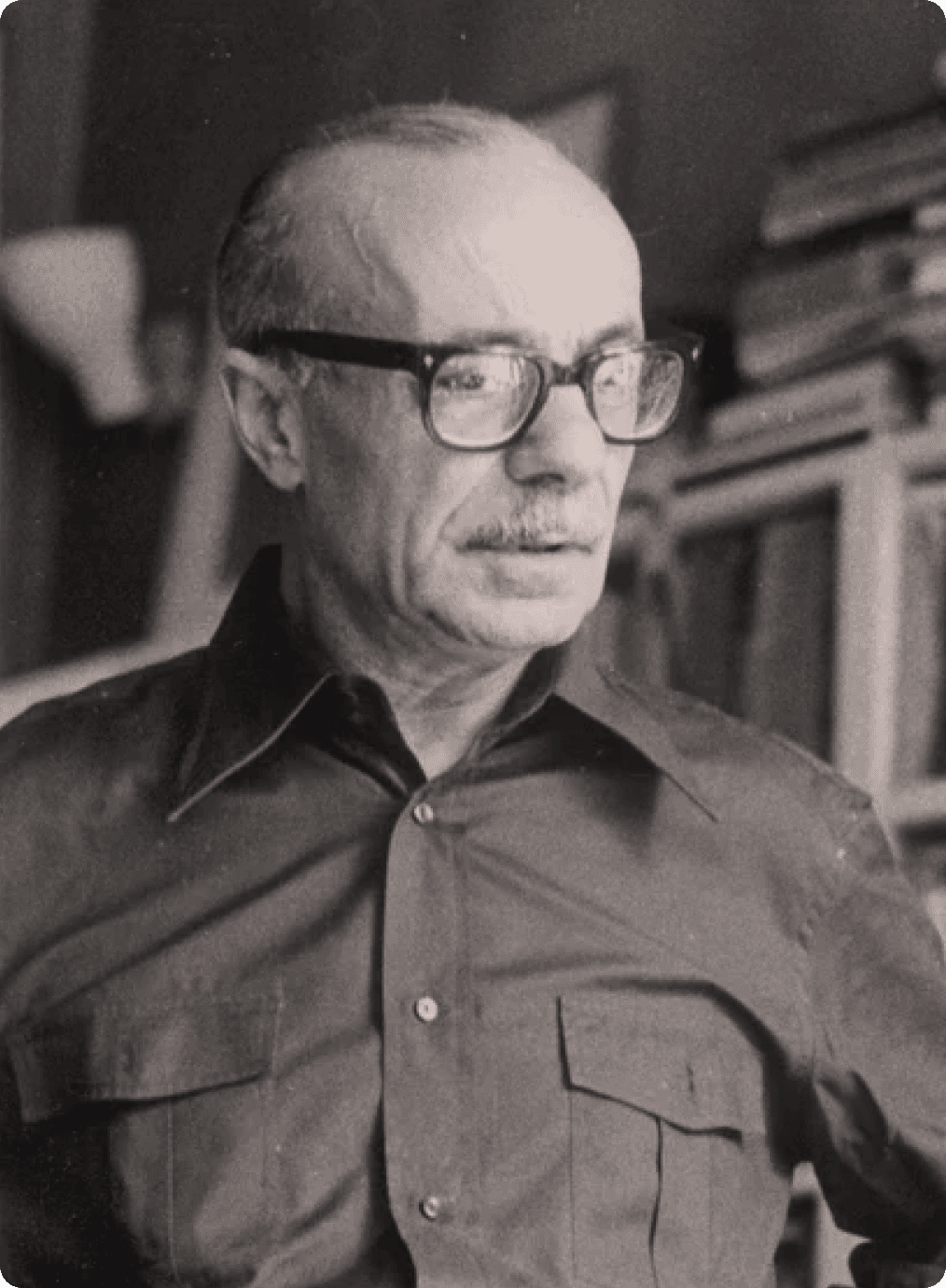
Music
Alfred Schnittke (1934–1998) is one of the most distinctive and enigmatic composers of the late twentieth century. Born in Engels, in the Soviet Union, he developed a highly individual musical language, often bringing together different styles, epochs, and traditions. Schnittke wrote in almost every genre, including symphonies, concertos, chamber music, ballets, choral and vocal works, as well as numerous scores for film and theatre. His works are complex, erudite, and imbued with a deep spirituality. During the 1970s and 1980s, his music was often viewed with suspicion by the Soviet authorities, and several of his works were banned or rarely performed in the USSR. Today, Schnittke is recognized as one of the great voices of Russian music and a major figure of the modern repertoire — a composer whose work embodies artistic freedom, moral depth, and a restless search for truth.
Video
Behind the scenes
Report on the Blind
Press
“The virtuosity of the performance applies to the piano playing as much as to the spoken text. The violence and destruction lie close below the surface, as does the madness and confusion.”
Göteborgs‑Posten, Sweden, June 2026
“John Malkovich's monologue found an ideal mirror in the pages of Soviet composer Alfred Schnittke.”
Forli Review, Italy
“A little gem to be cherished.”
www.teatroecritica.net, Italy
“The intensity of the musical flow, in the magnificent interpretation by Anastasya Terenkova, encouraged the audience to experience more deeply the inner states of Fernando, the main character of Report on the Blind.”
www.klasicnimirko.com Novi Sad, Serbia
Production History
Since its creation in 2015, Report on the Blind has captivated critics and audiences alike in South America, Switzerland, Italy, Belgium, Slovenia, Slovakia, Croatia, Hungary, Armenia, Finland and more. It has been presented at such prestigious festivals and venues as Mittelfest and Emilia Romana in Italy, Ljubljana Festival, the Baltic Musical Seasons in Jurmala and renowned concert halls, including Bozar in Brussels, Helsinki Art Center, Budapest Congress Hall, Lisinski Hall in Zagreb and Teatro Coliseo in Buenos Aires.
The project collaborated with such orchestras as Helsinki Philharmonic, Buenos Aires Symphony, Armenian State Symphony, ISolisti Aquilani, Óbudai Danubia Zenekar, Geneva Chamber Orchestra. Among the invited conductors are Alvise Casellati, Sergei Smbatyan, Dirk Brossé, Raphaël Merlin.
Report on the Blind
 © NF
© NF © V.Velickovic
 © V.Velickovic
 © V.Velickovic
 © V.Velickovic
 © V.Velickovic
 © V.Velickovic
 © V.Velickovic
 © V.Velickovic
 © V.Velickovic
 © Frederic Laverriere
 © Luca A. d'Agostino
 © Alice BL Durigatto
 © Festival Emilia Romagna
 © armsymphony.am
 © armsymphony.am
 © NF
© NF © NF© NF© V.Velickovic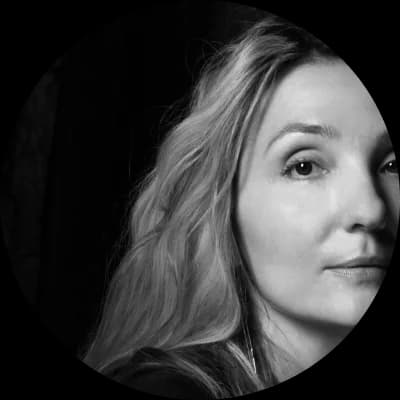
“Music has a power like nothing else — it can take a story in any direction it chooses. That is its beauty, and sometimes — its intimidating force.”
Anastasya Terenkova